



Other driveway construction guide
Resin bound vs resin bonded
Understand resin bound and resin bonded: mixing, broadcasting, permeability, suitable bases and aftercare.
Read the resin bound vs resin bonded guide →A complete, plain-English guide to the excavation, drainage, stone sub-base, asphalt layers, equipment and technical terms in your detailed driveway quotation — including what 125 Pen actually means.
Enter approximate dimensions for an indicative price range
Indicative estimate only, not a fixed offer. Excavation, access, edges, drainage and ground conditions affect your final itemised quotation. The example estimate applies the original source page's pricing logic and shows VAT separately.
A detailed quotation can contain unfamiliar expressions: formation level, Type 1, AC20 dense binder, 100/150 bitumen, 125 Pen, tack coat, SMA, kerb haunching and plenty more. Each has a meaning, and most relate to something that affects how your driveway performs years after the contractors have left.
This guide follows the construction of a new domestic tarmac driveway from bare ground. It explains the order of work, what equipment is likely to arrive, what each material does and what to look for in a properly itemised quotation. It also explains where an overlay or resurfacing project follows a different method.
Most of the strength comes from the ground preparation and the compacted layers beneath the finished asphalt.
A specification should tell you which layer is being measured and whether the depth is before or after compaction.
The driveway needs deliberate falls and somewhere suitable for surface water to go. A smooth finish alone does not prevent puddles.
Think of a driveway as a small engineered road. The visible topcoat is only one component. Every layer has a specific job, and a failure below ground will often show up at the surface as rutting, cracking or settlement.
Sometimes an additional asphalt base or a capping layer is needed; sometimes a suitably assessed resurfacing project can reuse sound existing construction. The four bands are a simple illustration, not a universal rule.
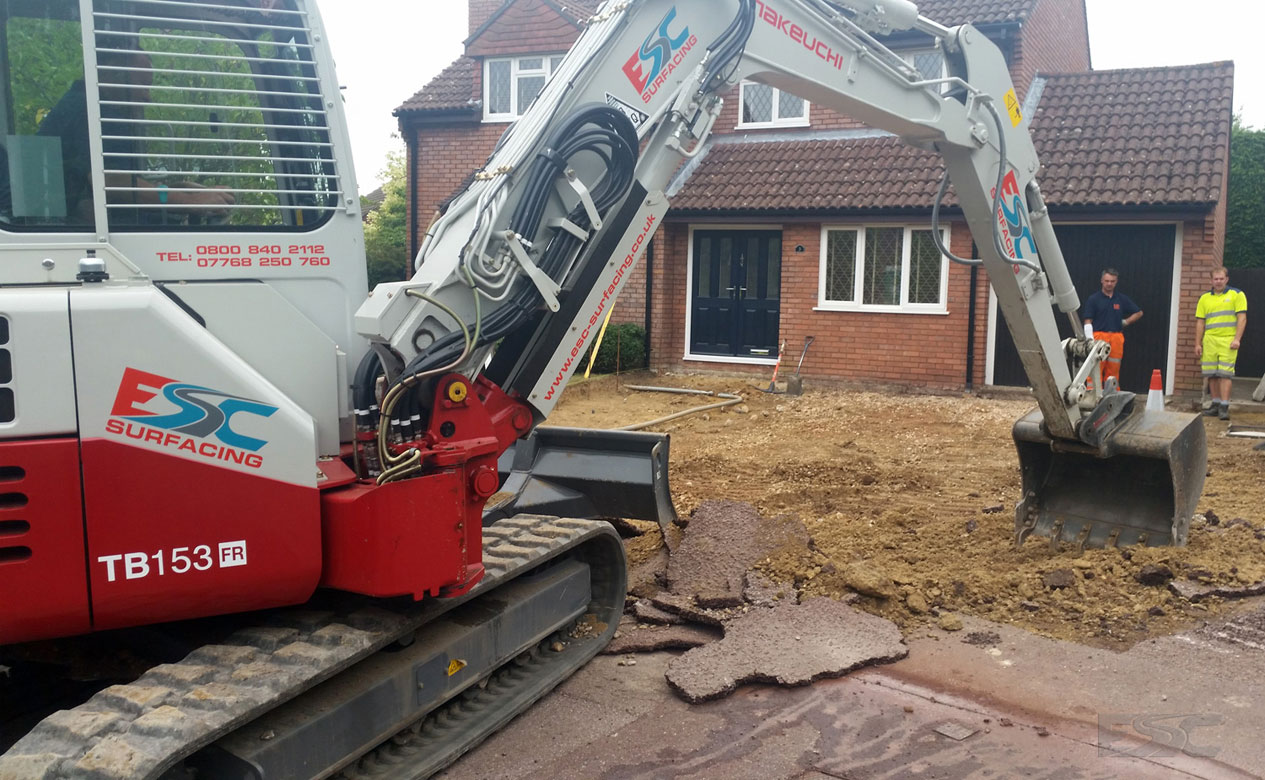
Excavation depth is measured down from the proposed finished driveway level. If the design calls for 150 mm of compacted granular sub-base, 60 mm of compacted asphalt binder and 30 mm of surface course, the combined example is 240 mm, plus any extra excavation needed for unsuitable ground, edging foundations or drainage features.
A contractor cannot establish the right dig depth simply by saying “we always dig out 200 mm”. Existing ground levels, access thresholds, tree roots, ground strength, required falls and the chosen build-up must be considered together.
Compacted thickness means the thickness after the roller or compactor has finished. Material is normally placed thicker while loose because it reduces in depth as air spaces are closed.
This is the typical sequence for a full construction project. Some stages overlap, and the precise sequence is adjusted to the property. The key is that each stage is checked before the next one conceals it.
We start by considering the area in square metres, entrances, turning space, vehicle types, slope, door thresholds, garage levels, inspection covers and access for plant or deliveries. Existing defects can give clues about the supporting ground.
We discuss the type of finish, the driveway edges and drainage route. On suspect ground, further investigation or testing such as a CBR assessment may be needed.
Why it matters: these findings establish the proposed specification; they should not be guessed after excavation starts.
For a domestic front garden in England, a traditional impermeable driveway above 5 m² normally needs planning permission if water is not directed to a suitable permeable area. A lawful vehicle crossing or dropped kerb is a separate consideration. We also establish which land is private and where public highway controls apply.
Underground electricity, gas, water, telecoms and private drains must be investigated using records, appropriate service detection and safe digging methods.
Why it matters: a well-built driveway can still be unlawful or unsafe if these matters are overlooked.
Access routes, adjacent paving, walls, planting, doorsteps and exposed services are considered before work begins. There may be temporary barriers, designated storage areas and arrangements for skips, lorries and pedestrians.
Deliveries and plant movements are planned to avoid damage, particularly on narrow shared drives or sloping entrances.
Old paving, concrete, asphalt, loose gravel, turf, roots and any unsuitable material are stripped away as required. An excavator, breaker or saw may be used, depending on the existing material.
Arisings are loaded into skips or tipper vehicles for lawful disposal or recycling. The quotation should make clear whether removal and disposal are included.
Soil is dug out to the designed formation level: the top of the prepared supporting ground, below the new sub-base. Depth is checked against fixed reference levels such as thresholds and kerbs, not just the depth of an excavator bucket.
Excavation can reveal clay, made ground, buried rubble or unexpected obstructions; these may require an agreed variation if genuinely unforeseen.
The exposed ground is assessed for soft patches, waterlogging, movement and stability. Weak areas can be excavated and replaced with appropriate material. Depending on conditions, a separation geotextile, reinforcing geogrid or additional capping layer may be specified.
Simply compacting wet, unstable soil is not a reliable substitute for ground improvement.
Why it matters: if the subgrade moves, the layers above tend to move with it.
The surface is designed to shed rainwater to a lawful destination, such as a suitable planted area, correctly designed soakaway or drainage system. Where required, linear drainage channels are set at the correct level and connected to an appropriate outlet.
The fall is the deliberate slope. It may be expressed as a ratio (for example 1:60, approximately 17 mm drop per metre) or as a percentage; the actual gradient depends on geometry and drainage design. Water should not be directed onto the pavement or neighbouring property.
Concrete kerbs, bullnose kerbs, block-paving soldiers, setts or other approved edgings define the shape and help support the edge of the paved construction. Rigid edging is usually laid on a suitable concrete foundation and haunched with concrete behind it.
Edging levels must work with the finished asphalt thickness and the proposed drainage fall. Decorative borders are optional, but unsupported asphalt edges can be vulnerable.
Specified granular aggregate is delivered, levelled and compacted in suitable lifts or layers. The correct number of passes and layer thickness depend on the plant, aggregate and ground conditions. The finished surface should be stable, even and at the agreed level.
For an illustrative domestic driveway, a quotation might specify 150 mm compacted Type 1. This is an example, not a depth suitable for every site.
Why it matters: inadequate compaction causes settlement and wheel ruts even when the asphalt itself was correctly laid.
Before any asphalt arrives, the team checks falls, restraints, drain gratings, chamber covers and finished layer allowances. Low areas are corrected with suitable materials, not hidden beneath an excessively thick patch of wearing course.
Service covers may need resetting or replacement with covers of appropriate load rating.
Hot asphalt from the mixing plant is transported to site and laid using a paving machine where practical, or carefully placed by hand for tight and irregular areas. It is spread at a thickness intended to produce the specified compacted depth after rolling.
A commonly encountered quote description is AC20 dense bin 100/150: asphalt concrete, 20 mm nominal aggregate size, dense binder-course mixture, with 100/150 penetration-grade bitumen.
Where required by the design and layer condition, a suitable bond coat is applied between asphalt layers to help them act together. The final course may use an asphalt-concrete or stone-mastic-asphalt mix selected for the finish and loading.
Surface mix labels can look similar but refer to different material types. AC6 dense surf is not the same specification as SMA 6 surf, even though both refer to a 6 mm nominal aggregate size.
While the material remains workable, appropriately sized rollers compact the asphalt. Edges and awkward areas may need a smaller vibrating plate. Operatives work to avoid visible roller marks, open joints, damage at kerbs and segregation of coarse and fine aggregate.
Construction joints and interfaces with existing surfaces are formed and treated appropriately; good joint detailing helps limit water entry.
Once surfacing is complete, the team removes debris, checks the drainage falls and cleans accessible surrounding areas. The homeowner should receive clear instructions for opening the driveway to pedestrians and vehicles, including precautions for hot weather and stationary wheel turning.
ESC's source page recommends waiting at least 48–72 hours before parking; the actual handover advice must reflect the weather, mix, construction and the installer's assessment.
Why it matters: a newly laid asphalt driveway may be firm enough to walk on before it is ready for normal vehicle use.
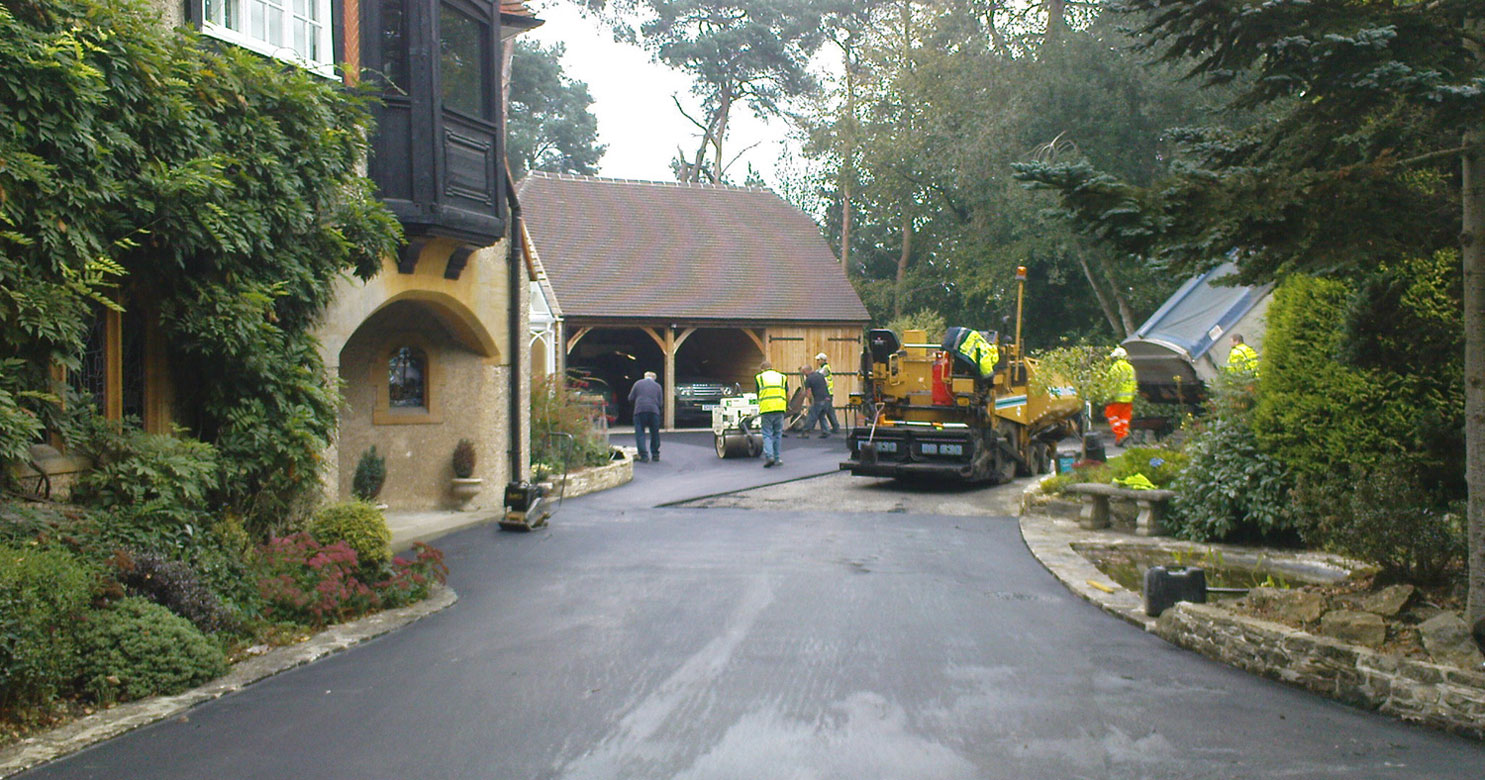
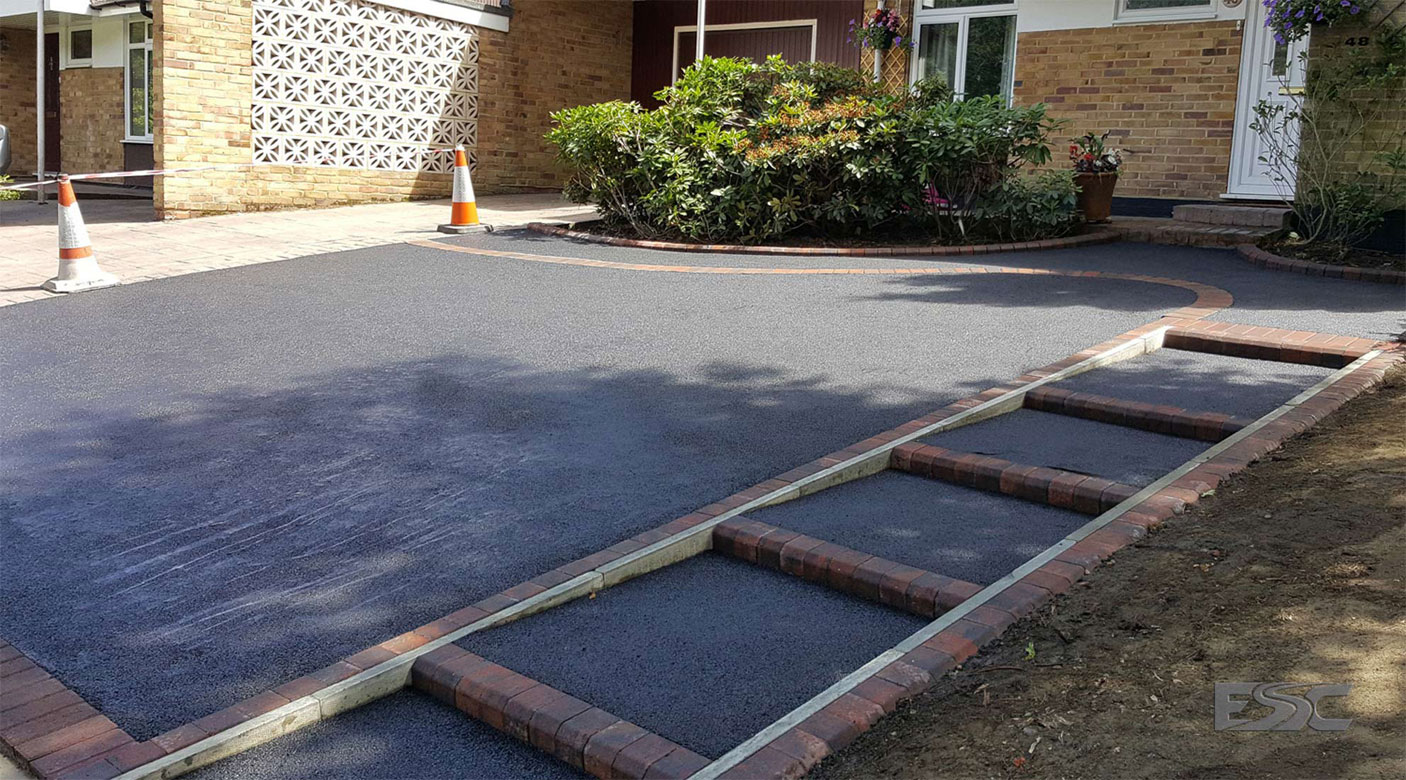
Asphalt is a carefully produced mixture of graded stone, sand, mineral filler and bitumen. “Tarmac” is the everyday name people use for the finished surface; a professional quote should identify the actual mixture, where relevant.
| Quote terminology | Plain-English meaning | Why the contractor specifies it |
|---|---|---|
| MOT / SHW Type 1 | Well-graded granular sub-base with a controlled mixture of larger and smaller particles, compacted below the asphalt. | Builds a stable platform and spreads loads. “Type 1” alone does not tell you the thickness or suitability of the ground beneath. |
| Type 3 aggregate | Another engineered aggregate often used as part of designed permeable or low-fines construction. | Not an automatic substitute for Type 1; drainage performance depends on the complete pavement design. |
| AC20 dense bin | AC = asphalt concrete; 20 = nominal maximum aggregate size in millimetres; dense = grading type; bin = binder course. | Often selected as a lower structural asphalt layer. |
| AC6 dense surf | Asphalt-concrete surface course using a nominal 6 mm aggregate size and a dense grading. | Provides a relatively fine textured finish suitable for certain applications and designs. |
| AC10 close surf | Close-graded asphalt-concrete surface material with nominal 10 mm aggregate. | May be chosen for a different texture or duty; not interchangeable with every 6 mm product. |
| SMA 6 / SMA 10 | Stone Mastic Asphalt, a different asphalt mixture family with a stone skeleton and relatively rich mastic. | Can offer a different surface texture and performance; the approved product formulation matters. |
| 100/150 bitumen | A paving-grade binder classified by its needle-penetration range, under BS EN 12591. | Describes bitumen consistency—not aggregate size, layer depth or quality by itself. |
| Bond / tack coat | A suitable bitumen-based emulsion or other specified bonding treatment between layers. | Helps successive asphalt courses adhere rather than slide or separate. |
| Geotextile / geogrid | Specialist sheet or grid used where specified to separate materials or provide reinforcement. | Can help with challenging formation conditions; not automatically required everywhere. |
Common industry shorthand for
100/150 penetration-grade bitumen
“Pen” means penetration. It refers to a laboratory test of the bitumen binder used to hold the stone particles together. A standard needle is allowed to penetrate a prepared bitumen sample under controlled conditions. The usual penetration test is carried out at 25°C, with a total load of 100 g applied for five seconds. The depth is recorded in units of one-tenth of a millimetre.
The formal 100/150 grade means the measured penetration is within the specified 100–150 range at 25°C. 125 Pen is a commonly used nominal or midpoint shorthand for this grade; it is not a separate 125 mm asphalt thickness, a 125 mm stone size, or an indicator of 125 years' durability.
Generally, a higher penetration number means softer bitumen under the test conditions. For example, 100/150 is softer than 40/60. Whether that is right for a particular driveway depends on the mixture design, site use and expected service conditions—not on “harder equals better”.
AC 20 dense bin 100/150
AC — asphalt concrete, the mixture family.
20 — nominal aggregate size, in millimetres; not the finished thickness.
dense — a description of the aggregate grading or mixture family.
bin — binder course, located beneath the surface course.
100/150 — penetration grade of the bitumen binder.
A full product specification may include additional abbreviations, declared performance classes and recycled-content details. Ask your contractor or asphalt supplier to confirm the exact product where necessary.
It does not tell you the amount of binder in the mix, how thickly it will be laid, whether it is suitable for a heavy vehicle, or whether the proposed layer is a wearing course. Those are different specification decisions.
It is also different from “125 mm of tarmac”, which would describe the depth of material. One quote might specify an asphalt binder course containing 100/150 bitumen at 60 mm compacted depth, followed by a 30 mm surface course. Those numbers answer completely different questions.
Quick rule: the number attached to Pen describes binder consistency; the number attached to AC or SMA describes aggregate size; the number followed by mm compacted describes layer thickness.
In everyday British conversation, tarmac is a catch-all term for a blacktop driveway. Strictly, modern driveway surfaces are generally bitumen-bound asphalt mixtures, not the original coal-tar-bound material historically associated with the word “tarmacadam”. The word “Tarmac” is also used as a trade name in the UK.
Macadam traditionally describes a graded stone road construction; DBM or dense bitumen macadam is older terminology still encountered on quotes. Today's more precise mixture terminology uses designations such as AC20 dense binder or AC6 dense surface.
SMA and AC are not identical products. An attractive fine finish can be achieved with different correctly specified mixes, but a quote should not call one product another.
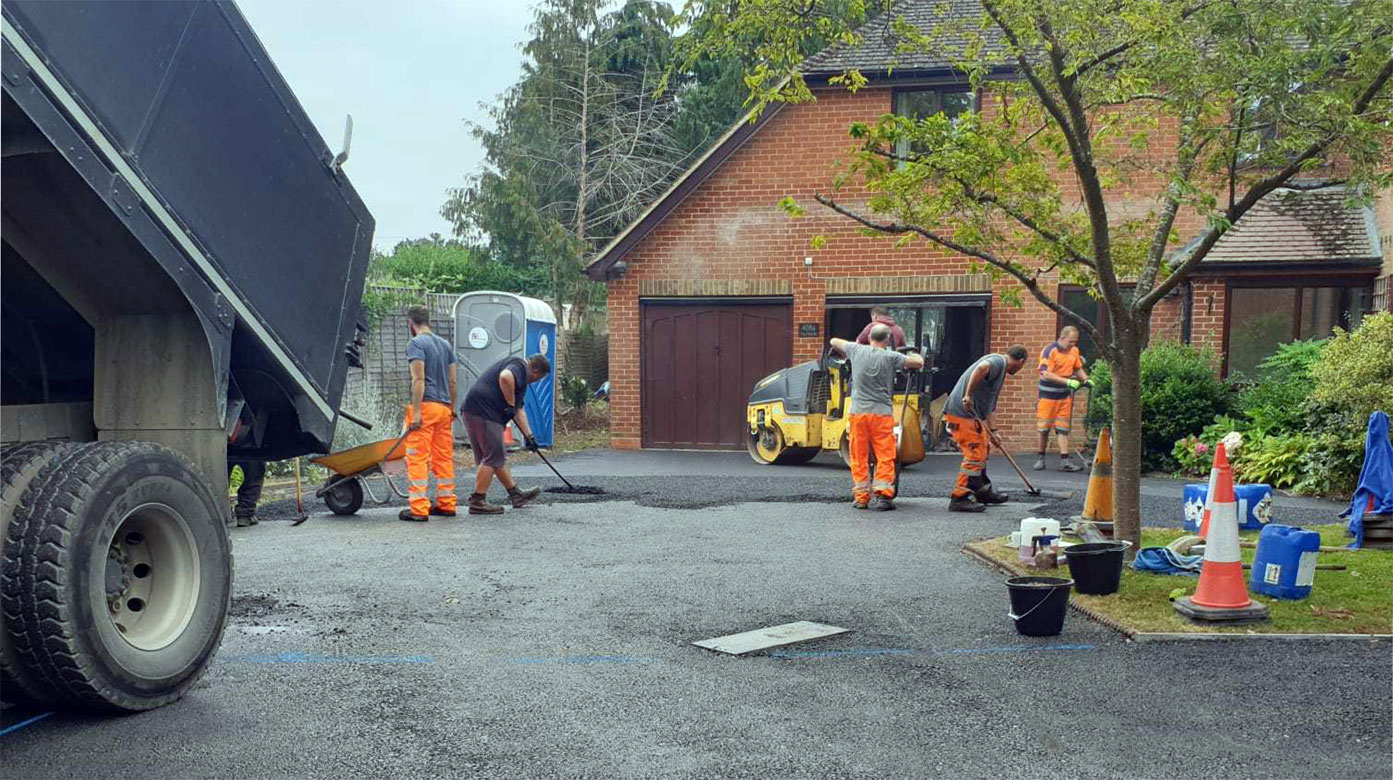
Different tasks need different equipment. A very small or awkward driveway may be largely hand-laid; an open, accessible driveway may benefit from a compact paving machine. What matters is the correct method for the site.
Removes old material, excavates formation and handles groundwork with greater precision than manual digging alone.
Breaks concrete or cuts neat edges where existing hard surfacing must be removed.
Moves spoil off site and brings aggregate or other construction materials to the working area.
Establishes height references and checks excavation depth, surface levels and drainage falls.
Helps suitably trained operatives identify buried services together with records and safe trial excavations.
Compacts granular aggregate and tight locations where a larger roller cannot safely or effectively reach.
Compacts sub-base or hot asphalt as appropriate, with size and rolling pattern chosen for the layer and access.
Places hot asphalt consistently across accessible areas at a controlled width and preliminary depth.
Helps retain asphalt temperature during transport and placement; excessive cooling makes compaction harder.
Used to distribute, shape and finish hand-laid asphalt, particularly along curves and around features.
Applies a specified bond/tack coat when needed to prepare an interface between asphalt layers.
Where specified, appropriate testing can check thickness or compaction; domestic quality assurance is tailored to the job.
An itemised quote should enable you to understand the scope, the materials, the thicknesses and the excluded items. Two prices are not directly comparable if one includes excavation and proper drainage and the other assumes an overlay.
Illustrative quantities only. Neither the sequence nor the depths above constitute ESC's guaranteed installation specification, and the final mixture cannot be determined by the phrase “approved asphalt” without a product designation.
The price per square metre can change because of access restrictions, excavation depth, spoil disposal, removal of old concrete, the amount of edging, drainage works, asphalt deliveries, small-area minimum charges, colour choice, number of layers, job complexity and the equipment required.
| Phrase on a quote | What to ask | Why it matters |
|---|---|---|
| “Dig out to 250 mm” | Measured from which finished level? Is extra excavation for poor ground included? | Excavation depth and intended final build-up must be consistent. |
| “150 mm Type 1” | Is this compacted depth, and what is the source/specification of the aggregate? | Loose and compacted depths are not interchangeable. |
| “60 mm basecoat” | What exact asphalt mix is meant? Is it a binder course? | “Basecoat” is informal and may describe several different layers. |
| “125 Pen tarmac” | Which asphalt mixture contains this bitumen, and what is the proposed layer thickness? | Bitumen grade alone does not identify the installed asphalt. |
| “Lay SMA surface” | Which SMA product, nominal size, binder grade and compacted depth? | SMA is a family of mixes rather than one universal product. |
| “Drainage included” | Where is water collected, discharged and maintained? | A channel with no lawful, effective outlet is not a complete solution. |
Many costly defects begin with work that is impossible to see once the finished driveway is black. These are useful questions to raise at the survey and at handover.
Inspect for consistent falls, tidy interfaces, firm edges, well-formed joints and obvious low spots. Some surface texture variation is normal; standing water, open edges, obvious segregation, wide gaps or major roller marks deserve explanation.
First few days: follow the site team’s advice about cooling, initial use and when vehicles can return. Avoid skip legs, trailer jockey wheels and similar concentrated loads without suitable protection.
Hot weather: bitumen-bound surfaces can soften in high temperatures. Sharp steering while stationary and heavy point loads can leave marks, especially when the surface is relatively new.
General maintenance: clear leaves and sediment from drains, remove weeds before roots take hold, deal with fuel or oil spills promptly and seek advice if cracks or settlement develop.
Cleaning: use gentle methods, especially near edges and joints. Aggressive pressure washing and incompatible chemicals may damage the finish.
Search for a word or a phrase from your quotation. The glossary covers asphalt names, bitumen grades, excavation, groundwork, kerbing, drainage, specialist equipment and installation methods.
No matching terms. Try fewer words, or ask us using the contact form below.
From 125 Pen bitumen to driveway thickness, drainage rules and when you can park, here are practical explanations without the industry jargon.
It refers to the consistency of the bitumen binder, not the depth of the asphalt. In UK surfacing, 125 Pen is often shorthand for 100/150 penetration-grade bitumen, classified using a needle penetration test at 25°C. The correct mixture and layer depth must be specified separately.
There is no single safe excavation depth for every property. The necessary build-up depends on the supporting soil, vehicle loading, drainage, levels and the chosen pavement design. A sample construction could include 150 mm of compacted Type 1, 60 mm of binder course and 30 mm of surface course, but those are illustrative values, not universal minimums.
“50 mm of tarmac” is incomplete as a new-construction specification. You need to know whether the figure refers to one asphalt layer or all asphalt courses, whether the depth is compacted, and what properly prepared construction supports it. A resurfacing overlay has different requirements from a new driveway.
Both are asphalt-concrete designations. AC20 uses a nominal 20 mm aggregate size and is commonly encountered in structural binder-course products. AC6 has a nominal 6 mm aggregate size and can be used in selected finer surface-course products. The number does not tell you how thick the layer is.
Neither is automatically better in every situation. Stone Mastic Asphalt and Asphalt Concrete are different mixture families. The appropriate specification depends on the required texture, loading, binder, layer thickness and manufacturer’s product data. A correctly laid suitable mix matters more than the marketing name.
A two-course construction allows a lower structural layer to do a different job from the top finishing layer. The binder course provides support and profile, while the surface course gives the final driving texture and appearance. The exact number and depth of courses are design decisions.
Type 1 is a graded granular sub-base specification. Unlike unsorted hardcore, its particle-size distribution and other properties are controlled. It still needs to be placed at the correct thickness and compacted over suitable ground.
They have different aggregate grading characteristics and are often used in different designs. Type 3 can be appropriate in some water-permeable construction systems. It should not be substituted for Type 1 without considering the complete pavement and drainage design.
Most conventional dense driveway asphalt is effectively impermeable for design purposes. Special porous asphalt can transmit water, but only when paired with a suitable permeable construction and outfall or infiltration design. A channel drain does not make an otherwise impermeable surface porous.
In England, a new or replacement front-garden driveway using traditional impermeable surfacing over 5 m² generally needs permission if rainwater cannot drain to a suitable permeable area within the property. Permeable construction or properly directed runoff can change this. Restrictions vary, so check your local planning authority and any dropped-kerb requirements.
ACO is a brand often used generically to describe a linear channel drain. A channel can collect runoff at a garage, property threshold or driveway boundary, but it needs a suitable channel rating, levels and legal connection to an effective drainage destination.
A full dig-out removes the existing construction to the required depth so the supporting layers can be rebuilt. An overlay puts new asphalt above an existing surface that has been assessed as sound. Overlaying a failing or unstable base can allow existing cracks and rutting to return.
A small, accessible driveway with straightforward ground conditions may be built over several working days. Extra excavation, drainage, weather constraints, permissions, material delivery and curing or cooling time can extend the programme. Your quote should state the expected duration and access arrangements.
Asphalt surfacing should not proceed when the weather or substrate conditions would compromise bonding, handling or compaction. Persistent rain, standing water and very low temperatures can prevent proper laying. Decisions should follow the selected mix specification and the installer’s assessment.
Tack or bond coat is a treatment designed to help one asphalt layer stick to another. The precise emulsion, rate and need for application depend on the specified construction and interface condition. It is not a replacement for proper surface cleaning or compaction.
Asphalt can appear uneven in colour immediately after laying due to variations in texture, aggregate, cooling and rolling. Some variation is cosmetic, but pronounced patches, segregation, open joints or persistent depressions should be discussed with the contractor.
Avoid sharp, stationary steering when newly laid asphalt is still vulnerable, especially in hot weather. The tyres can scuff or twist the surface. Follow the installer’s handover instructions and keep heavy point loads off the surface until appropriate.
ESC’s existing guidance advises waiting at least 48–72 hours, particularly in warm conditions, but the exact reopening period should come from the installer after considering the mix, thickness, temperature and loading. Foot access and vehicle access are not necessarily the same.
They may require a different engineered build-up or mixture selection from one intended only for private cars. Tell the contractor about vehicle weights, repeated parking, tight turning circles, trailers and any point loading before the specification is agreed.
Service life depends on ground conditions, drainage, materials, installation quality, loading and maintenance. A sound professionally installed driveway can provide many years of service, but no one fixed lifespan can be guaranteed without considering the individual site.
Two driveways with the same visible area can have different excavation depths, access difficulties, edging lengths, drainage requirements, existing surface removal, ground improvement needs and asphalt transport costs. Compare the work items, not just the square-metre price.
For customers who would like to go beyond the explanation in a quotation, these sources describe the relevant technical and regulatory framework. Full British Standards documents are generally licensed publications. This page is an educational guide, not a replacement for the applicable standards or a site-specific design.
Guide reviewed: 14 October 2026. The construction examples explain possible options and should not be taken as a published promise that ESC uses the same thickness or mixture on every project. Current product declarations, local rules and the issued quotation take precedence.
The visible finish is only one part of a driveway. These guides explain how the base, drainage, surface and maintenance requirements vary by material.
Understand resin bound and resin bonded: mixing, broadcasting, permeability, suitable bases and aftercare.
Read the resin bound vs resin bonded guide →Explore paver thickness, bedding, herringbone laying patterns, edge restraints, joints and permeable options.
Read the block paving driveways guide →Follow the hot bitumen and chippings process, from structural preparation to rolling and final sweeping.
Read the surface dressing (tar and chip) guide →See how a gravel drive is dug out, founded, contained, compacted and maintained, with or without stabilisation grids.
Read the gravel driveways guide →View suitability, drainage, access, maintenance and appearance in one easy overview.
See the driveway comparison →Have a question about your specification, materials or the construction process? Tell us about your project and we will explain the proposed works in plain English.
Read feedback from homeowners who have used ESC Surfacing. The reviews below are provided through our existing external review integration and independent profile links.

Which? Trusted Traders is an endorsement scheme for tradespeople. Read customer feedback about ESC on its independent profile.
Read Which? reviewsMyBuilder helps homeowners find and evaluate tradespeople. Visit ESC's profile to see feedback left by customers.
Read MyBuilder reviewsAsk about a binder grade, layer depth, edging detail or drainage requirement before work begins.